
The GOAT of weed control
Our good friend Adam Stolte runs Montana Goat Farm out of Gallatin Gateway and has been helping us reduce weeds in the native-ish areas surrounding lawns without chemicals while ALSO creating a delicious and healthy protein. We couldn’t be more stoked on what he and his herd does for our community. Here is a guest blogpost from him:
Here in the Gallatin Valley there is so much abundance. The land is fertile and well-watered, a naturally productive and beautiful place. Although this abundance we see around us is still here in a lot of ways, things have changed since John Bozeman's day, and I wonder if he would still be as attracted to this valley now as he was back then. With the recent proliferation of exotic grasses and toxic forbs would he still choose to settle in this valley? If cattle ranching was his trade, maybe not.
Most important to those early sentries of civilization was the presence of drought-tolerant bunch grasses. This group of grasses has the amazing ability to provide adequate nutrition throughout the winter months, so the settler's need to make and store hay was kept to a minimum. On the south-facing slopes the table was set, and the cattle and horses would feast all winter long. But this feast comes with a catch: the cattle need to be kept off the bunch grasses when they are at their most desirable stage, from May until October, a difficult feat for the free-ranging cattlemen.
So where does that leave us? After the greed of overgrazing along with the introduction of highly competitive exotics? A very goat-friendly valley! The Gallatin Valley surrounding Bozeman is a patchwork of farms, degraded rangeland, and development projects, luckily speckled with a few ecologically intact-ish parts here and there.
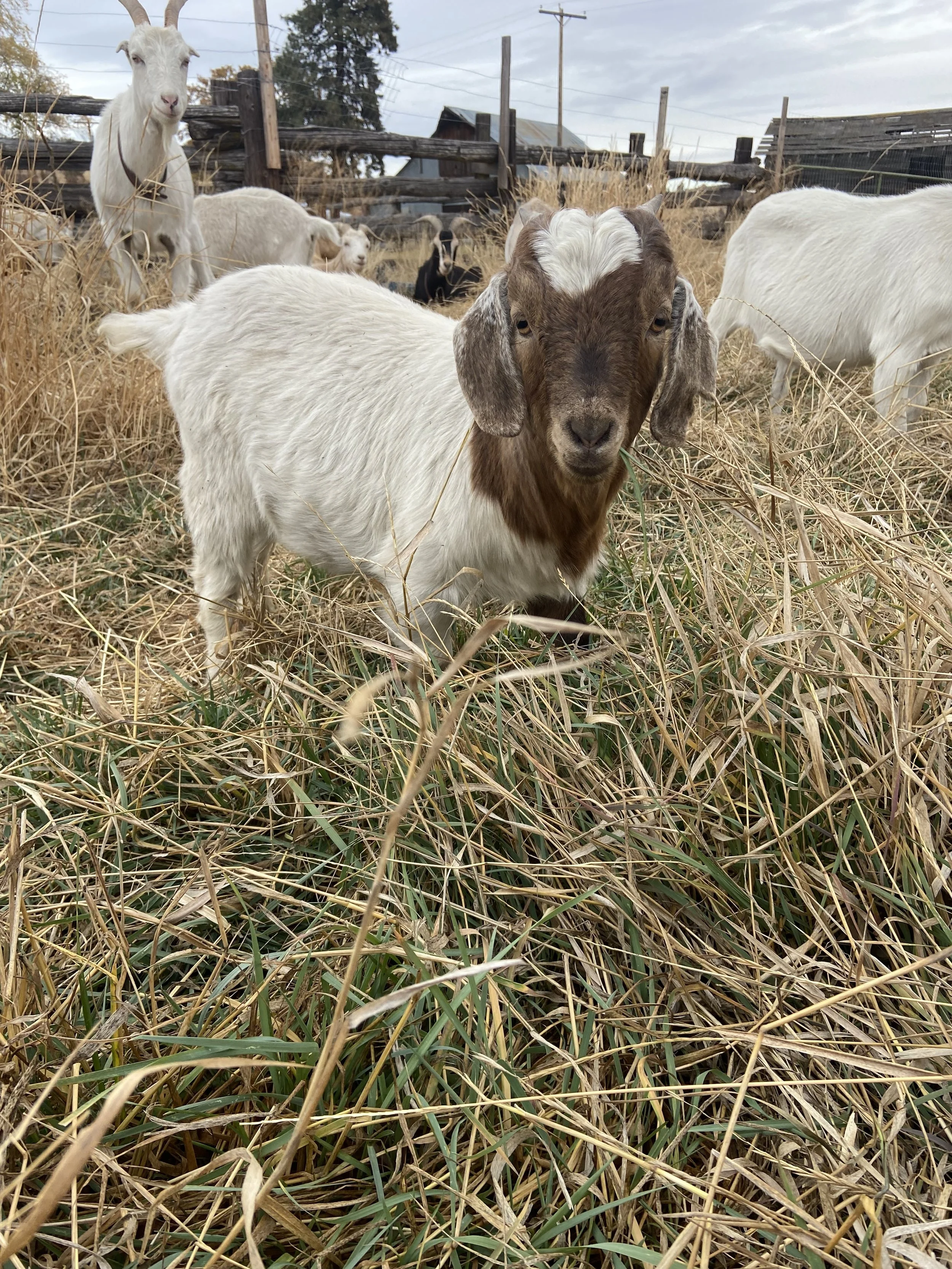
The goat is adapted to the waste-places, she is known as the trash-queen of rangeland; she makes use of things John Bozeman's horses and cattle would never touch. Relishing in the toxic forbs and woody shrubs that take up so much space here, they thrive where cattle would starve.
Goats grow slowly and cows grow fast, four times as fast as the stubborn goat. But the goat makes meat from the toxic plants that these generations of abuse have made abundant.
But we don't want goat homogeny; animals can complement each other. In Mongolia they have the system of what's called in English the "five snouts," where they have cows, horses, sheep, goats, and camels all grazing in sequence and together to effect the land in a balanced way.
The land wants to come back into her original splendor, but for now there is only a suggestion of what was here. Working alongside the small ruminants like goats and sheep we can help conserve what made this such an amazing place for future generations.
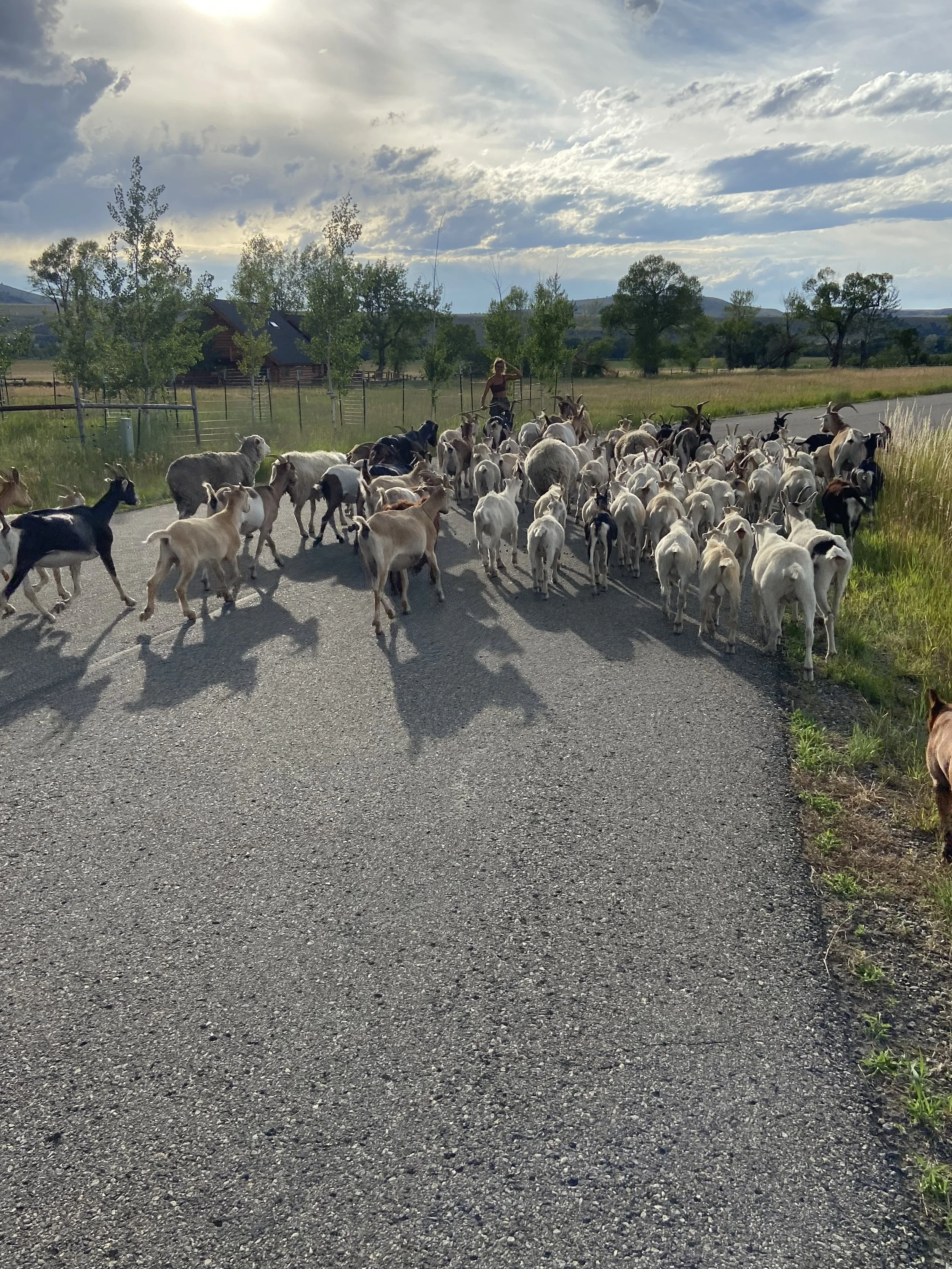
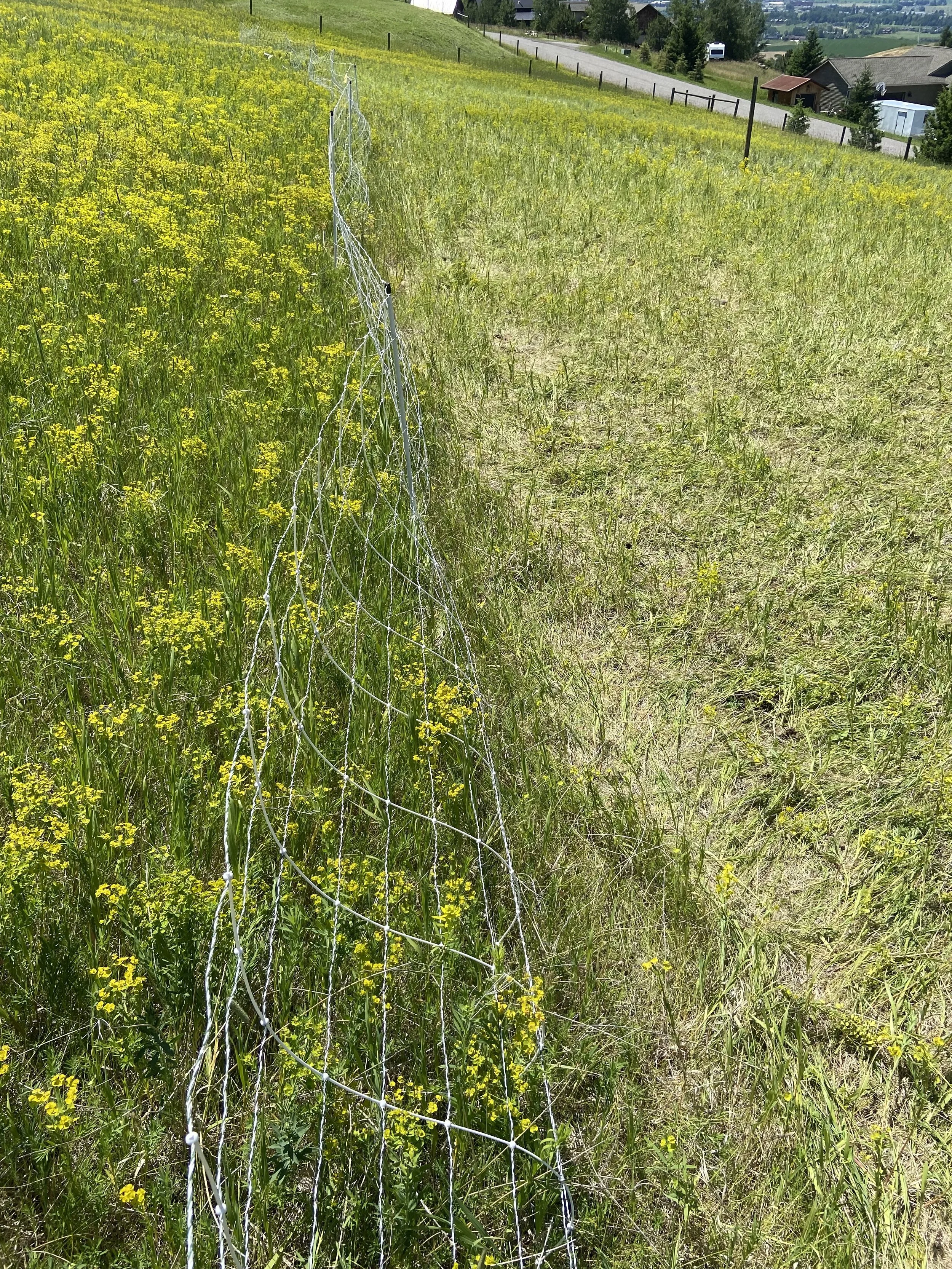
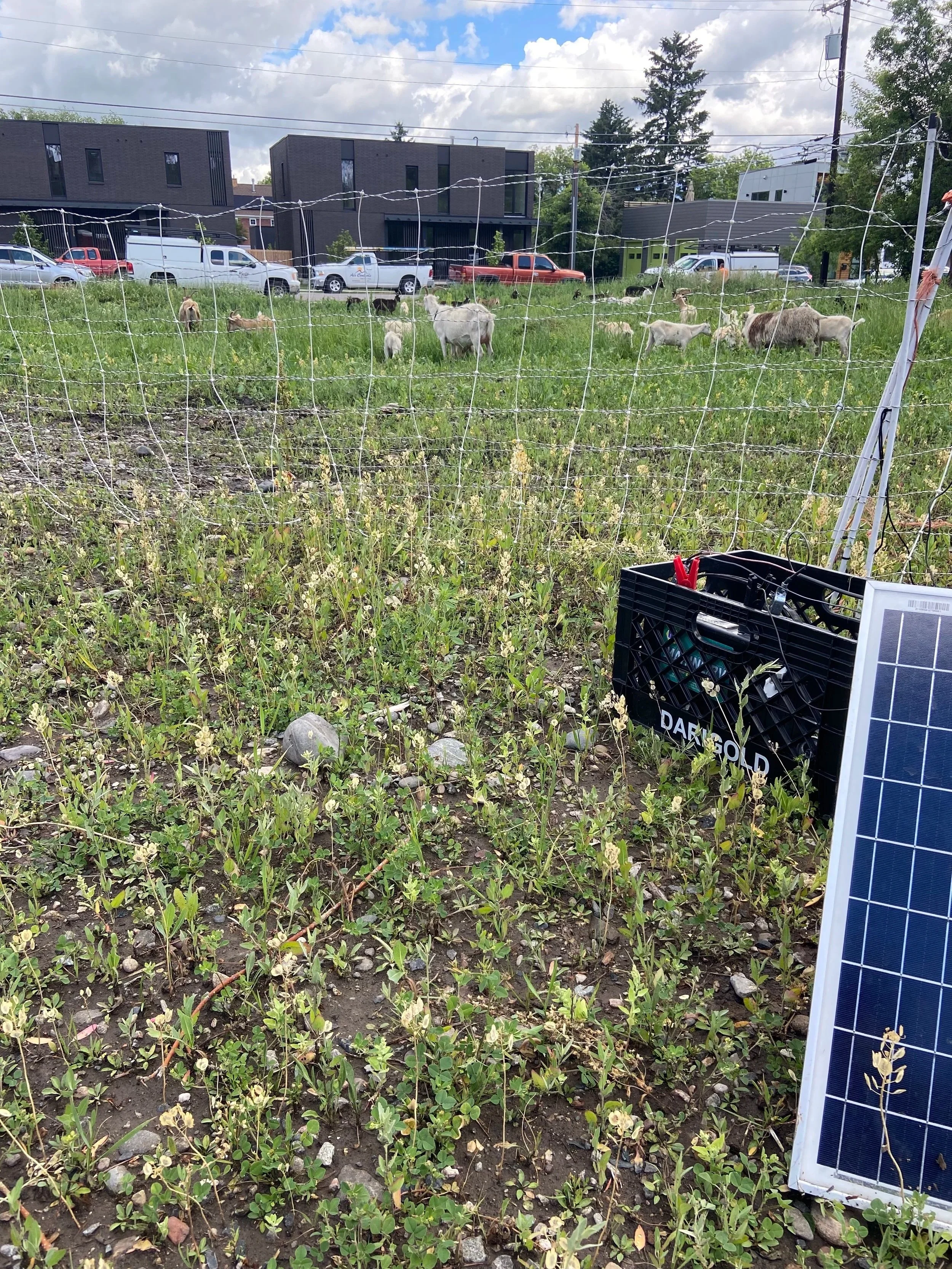
We utilize temporary electric netting to pinpoint the goats’ impact. We exclude fragile areas and shrubs to only impact the areas that need it. We put about 100 goats in a one acre area for 24 hours, but this setup changes depending on plant density, slope, and time of year.
The goats remain in the electric net fencing through the duration of the job, going directly from one pen to another. They remain on the site day and night, eating everything they can, then leaving behind valuable manure that is the least seedy of all the manures. So that they are not spreading the weeds that they are there to reduce.
Our costs are comparable to herbicide applicators, although our overhead is much higher as we must tend to the goats all winter long, feeding them hay when necessary. We try to offset this by selling some stock in the winter, but in general the use of goats as a weed-prevention tool is less profitable than the spray-applicators’ business model.
That said, the quality of life we enjoy with our animals seems much higher than the pesticide applicator's lifestyle of dangerous chemicals and using four wheelers on steep terrain. We think of ourselves as farmers first and weed-preventers second because the health of our animals always comes first.
Luckily for us the weeds that people want to impact with goats are usually the ideal food for goats: leafy spurge, knapweed, poison water hemlock, canada thistle, tansy ragwort, burdock, hoary alyssum, and so many more, are all great feed for goats.
We provide a helpful service to the community, create local jobs that people can feel good about, and produce healthy local food on top of all that. So even though the ecology of the Gallatin Valley isn't what it used to be, we can help to steer it into an era of lively sustainability for the future to enjoy. ~ Adam Stolte
Feel free to reach out to him directly or we are happy to connect you as well!